

English - Reading
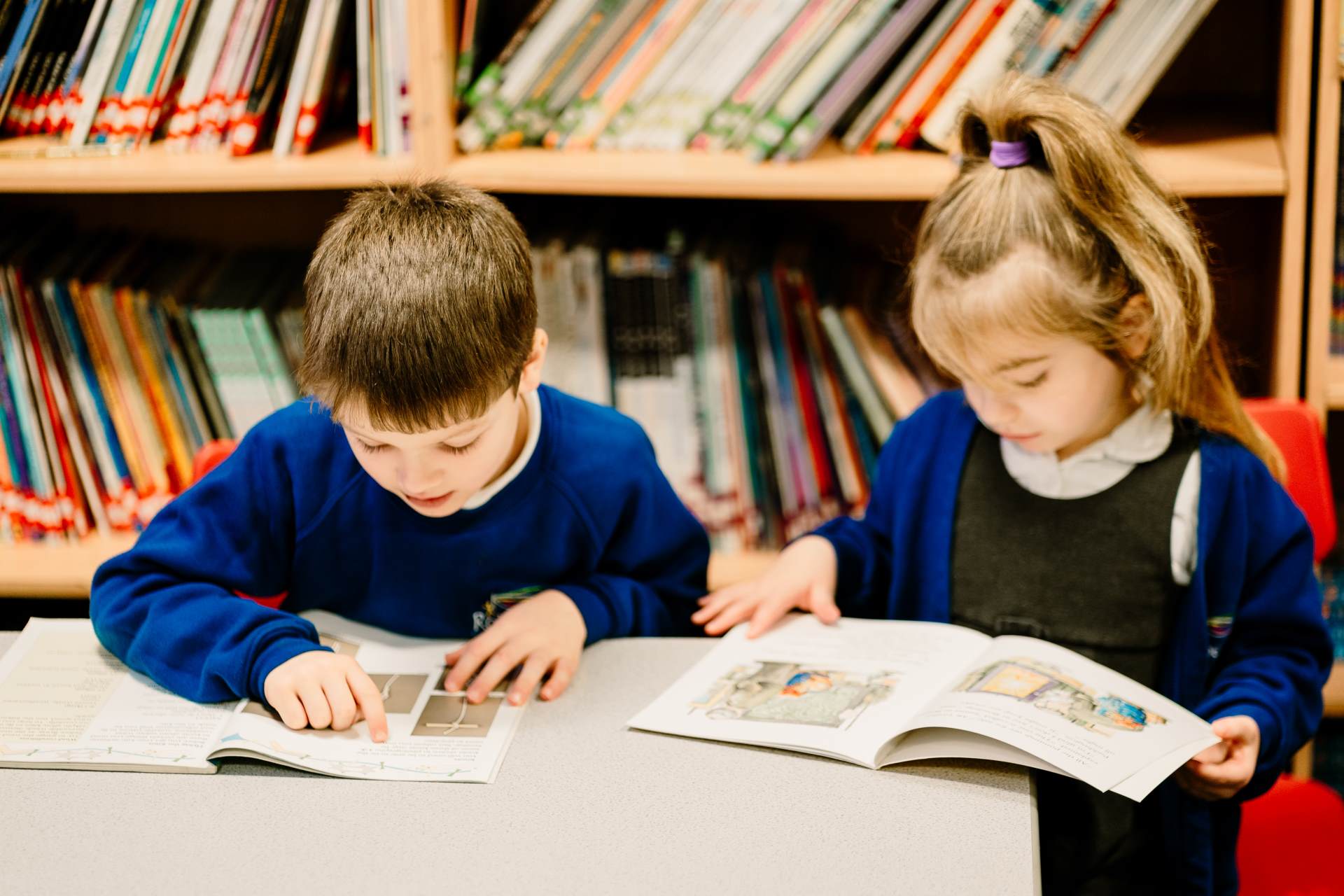
Reading is one of the most important skills children develop at primary school. It supports learning across the curriculum, helps children to understand the world around them and gives them the confidence to share ideas, ask questions and express themselves.
In the early years and beyond, children begin by developing early skills such as listening carefully, recognising sounds, learning new words and talking about stories. A strong foundation in phonics then helps them to understand the relationship between letters and sounds, so they can read unfamiliar words with increasing independence.
With regular practice, children develop pacy and fluency in reading. This means that they can read words accurately and smoothly, without having to stop and work out every sound. As reading becomes more automatic, children can give greater attention to comprehension: understanding what they have read, discussing characters and events, making predictions and thinking deeply about the author’s choices.
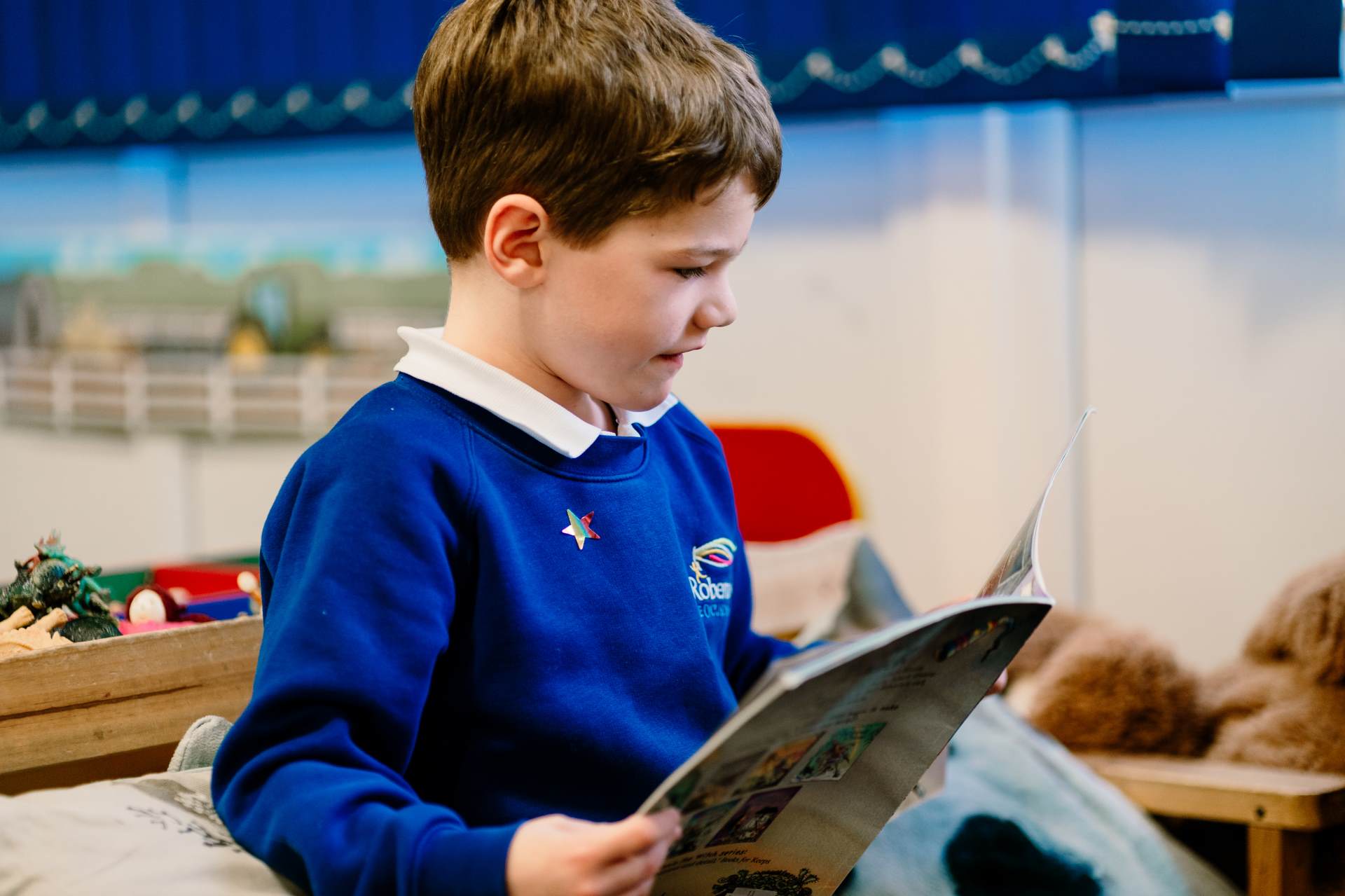
Reading is also a chance to explore experiences beyond our own. Through stories, poetry and information books, children meet different people, places and ideas. As their confidence grows, they can become absorbed in books and use their imagination, allowing the reader to disappear into other worlds.
Further Information
Reading rationale Reading progression of skills EYFS and KS1
Reading progression of skills KS2
Year 1 reading long term plan Year 2 reading long term plan


